Why everyone wants high-protein vegan cottage cheese right now
High-protein vegan cottage cheese is the plant-based answer to one of the biggest food trends of 2026. Cottage cheese has gone from a retro diet food to a social media star. People blend it into pasta sauce, bake it into flatbread, whip it into ice cream, and spread it on toast.
The reason is simple: protein. Regular cottage cheese packs roughly 11 grams of protein per 100 grams (approximate). That fits the "protein in everything" mood that is all over TikTok and Instagram.
But there is a problem. Millions of people in the US, UK, Canada and Australia eat vegan, vegetarian or mostly dairy-free. Others are lactose intolerant. Most store-bought vegan "cottage" products are hard to find, expensive, or surprisingly low in protein.
The good news is that you can make a creamy, curd-style swap at home in about 10 minutes. With the right base, it can match or even beat dairy cottage cheese on protein.
In this guide, you will learn:
- What high-protein vegan cottage cheese is and how it is made
- What the science says about plant protein, especially soy
- 7 easy swaps, with a protein comparison table
- A simple base recipe and meal ideas
- The mistakes that make vegan versions bland, watery or low in protein
If you are new to eating more plants, our guide to the Mediterranean diet for vegetarians is a great place to start, too.
What is high-protein vegan cottage cheese?
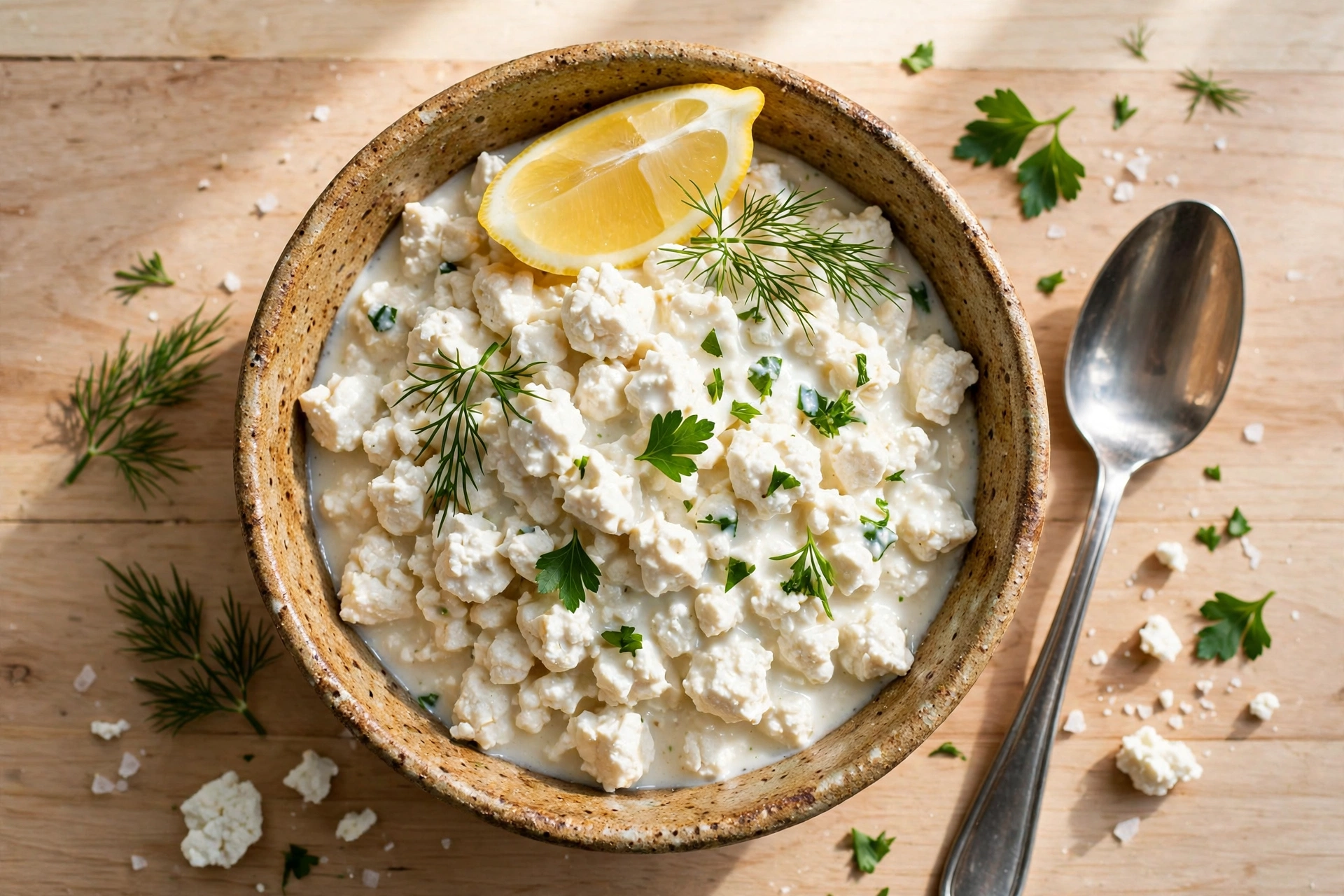
High-protein vegan cottage cheese is a dairy-free spread or side made to look, taste and work like cottage cheese. It has small soft curds, a mild tangy flavor and a creamy coating.
Dairy cottage cheese is made by curdling milk and keeping the curds. Vegan versions copy that texture with plants instead.
The most common bases
- Tofu: Crumbled firm tofu looks almost exactly like cottage cheese curds. It is the easiest high-protein option.
- Soy yogurt: Unsweetened soy yogurt adds tang and creaminess. It also adds some extra protein.
- Nuts and seeds: Cashews, almonds or hemp seeds make a rich, creamy sauce. They add healthy fats but less protein per calorie.
- Beans: White beans or chickpeas can be blended in for extra fiber and protein.
- Fermented products: Some new store-bought brands ferment nuts, seeds or even apricot kernels to create a cultured "cottage" flavor.
Why tofu is the star
Firm tofu is made from soybeans. Soy is one of the few plant foods that is a "complete" protein, meaning it contains all nine essential amino acids. That makes it the closest plant match to dairy protein.
According to USDA FoodData Central, firm tofu set with calcium sulfate has about 9 grams of protein per 100 grams. It also has about 200 mg of calcium in the same amount (approximate, varies by brand). Many extra-firm tofu brands sold in the US and UK list even more, often 12 to 17 grams per 100 grams. Always check the label.
What "high-protein" means here
For this guide, we call a swap "high-protein" if it gives at least 8 to 10 grams of protein per 100 grams. That is close to dairy cottage cheese. Nut-only versions often fall below that, which is why the recipe below uses tofu plus soy yogurt as the base.
Is plant protein as good? The evidence behind high-protein vegan cottage cheese
Yes, for most healthy adults plant protein can do the same job as dairy protein, as long as you eat a variety of foods. Large studies also link more plant protein with better long-term health. Here is what the research says, in plain words.
1. Soy gives you all the essential amino acids
Animal foods like meat, eggs and dairy are called complete proteins. Most plant foods are low in one or more essential amino acids. Soy is an exception, along with quinoa and buckwheat, as Harvard Health Publishing explains.
Even if you skip soy, eating a mix of beans, grains, nuts and seeds through the day can give you the full set.
2. More plant protein is linked to heart benefits
Harvard researchers looked at about 30 years of diet records from roughly 203,000 adults. People with the highest ratio of plant to animal protein had about a 19% lower risk of cardiovascular disease and about a 27% lower risk of coronary heart disease (Harvard Health).
This was an observational study. It shows a link, not proof that plant protein alone caused the benefit.
3. Plant protein and a longer life
A 2020 review in The BMJ pooled cohort studies with about 715,000 people. Eating more plant protein was linked to a lower risk of death from any cause. Each extra 3% of daily calories from plant protein was tied to about a 5% lower risk (Naghshi et al., BMJ 2020).
A separate US study of more than 400,000 adults aged 50+ found that swapping red meat or eggs for plant protein was linked to a 13% to 24% lower risk of death over about 16 years (Harvard Health).
4. Soy may modestly help cholesterol
The US National Center for Complementary and Integrative Health says replacing other proteins with soy protein may lower cholesterol a little. Soy isoflavone pills may not have the same effect (NCCIH, NIH). This is a good reason to choose whole soy foods like tofu over supplements.
5. What about soy and breast cancer?
This is one of the most common worries. Mayo Clinic experts say soy foods do not contain enough plant estrogen to raise breast cancer risk. Eating soy in moderation can be part of a healthy diet (Mayo Clinic News Network).
Who should be careful
- People with a soy allergy should use a nut, seed or bean base instead.
- People taking MAOI antidepressants should talk to their doctor. Tofu and soy sauce can contain tyramine, which may interact with these drugs (NCCIH).
- Some people notice bloating or gas when they first eat more soy or beans. Start slowly.
The bottom line on benefits
High-protein vegan cottage cheese is not a magic food. But it is an easy way to move some of your protein from animal to plant sources. That shift is linked with heart and long-term health benefits in large studies. For more ideas on building a healthy plate, see our balanced diet tips.
How to make high-protein vegan cottage cheese (recipe + 7 swaps)
The best everyday option is a tofu and soy yogurt blend: it takes about 10 minutes and lands close to dairy cottage cheese on protein. Below is the base recipe, then a table comparing 7 swaps.
The 10-minute base recipe
Makes: about 2 cups (roughly 4 servings)
Ingredients:
- 1 block (about 400 g / 14 oz) extra-firm tofu, drained
- 1/2 cup unsweetened plain soy yogurt
- 1 tablespoon lemon juice
- 1 teaspoon apple cider vinegar (for the classic tang)
- 1 tablespoon nutritional yeast (optional, for a savory, cheesy note)
- 1/4 teaspoon salt, or to taste
Steps:
- Press the tofu for 10 minutes between clean towels to remove extra water.
- Crumble two-thirds of the tofu into small, pea-sized curds with your fingers.
- Blend the remaining third with the soy yogurt, lemon juice, vinegar, nutritional yeast and salt until smooth.
- Fold the creamy sauce into the curds.
- Chill for 30 minutes. The flavor gets better after a few hours. Store in a sealed container in the fridge and eat within about 3 days.
As a rough guide, Harvard Health lists tofu at about 20 grams of protein per cup (Harvard Health). Your final number depends on the tofu brand you use.
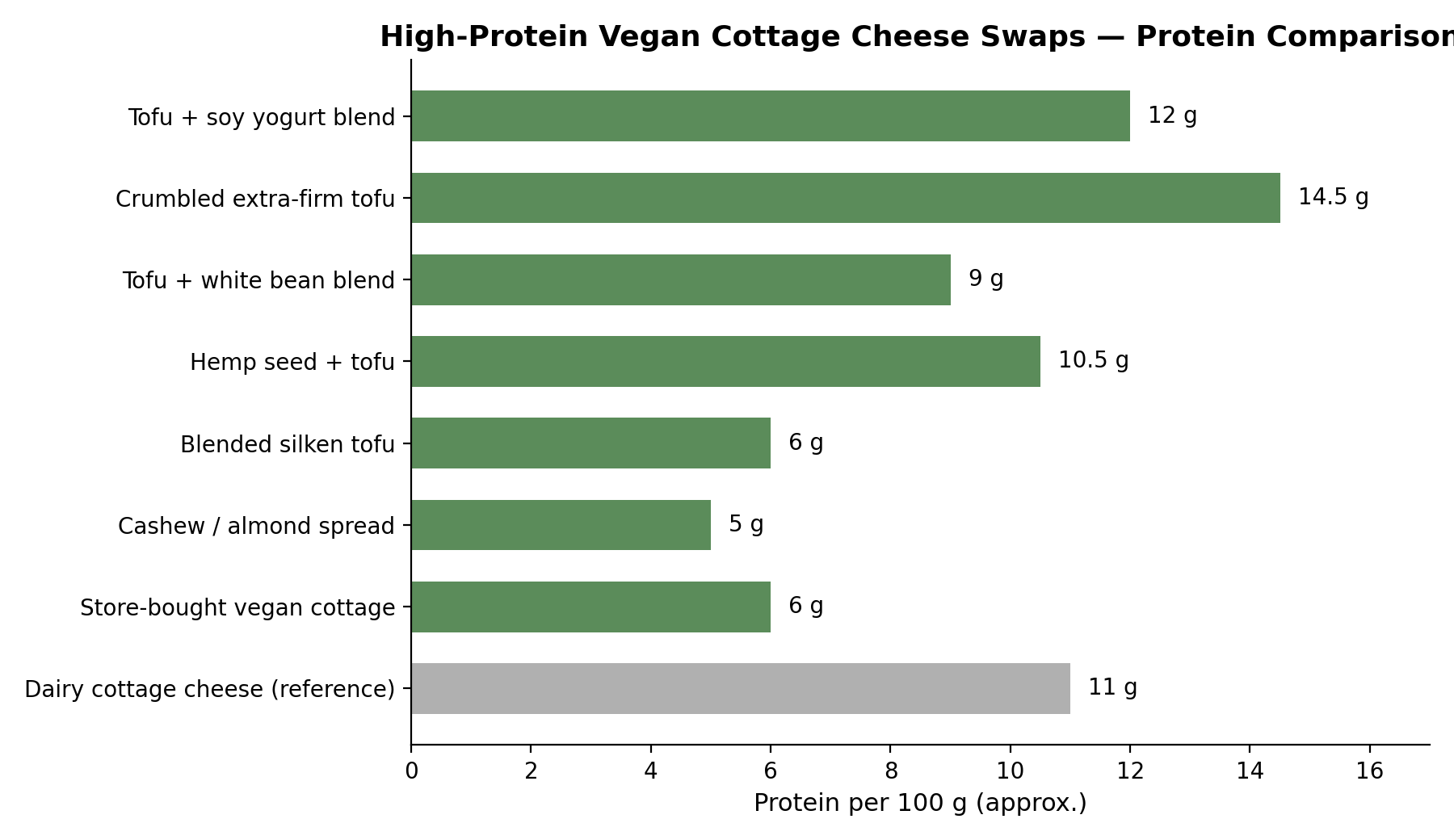
7 high-protein vegan cottage cheese swaps compared
Protein values are approximate per 100 g and vary a lot by brand. Always check the label.
| Swap | Approx. protein per 100 g | Texture | Best for | Notes |
|---|---|---|---|---|
| 1. Tofu + soy yogurt blend (recipe above) | 10–14 g | Curds in creamy sauce | Toast, bowls, snacking | Closest overall match |
| 2. Plain crumbled extra-firm tofu | 12–17 g | Firm curds, dry | Savory bowls, salads | Add lemon and salt |
| 3. Tofu + white bean blend | 8–10 g | Softer, creamy | Pasta sauce, dips | Adds fiber |
| 4. Hemp seed "cottage" (hemp + tofu) | 9–12 g | Nutty, rich | Savory toast, crackers | Higher in healthy fats |
| 5. Blended silken tofu | 5–7 g | Smooth, no curds | Baking, whipped desserts | Good for viral "cottage cheese ice cream" |
| 6. Cashew or almond cultured spread | 3–7 g | Rich, creamy | Flavor, occasional treat | Lower protein, higher fat |
| 7. Store-bought vegan cottage-style products | 2–10 g | Varies | Convenience | Read labels; many are low in protein |
| Reference: dairy cottage cheese | about 11 g | Soft curds | — | For comparison only |
Easy meal ideas
Here are simple ways to use your high-protein vegan cottage cheese across the day:
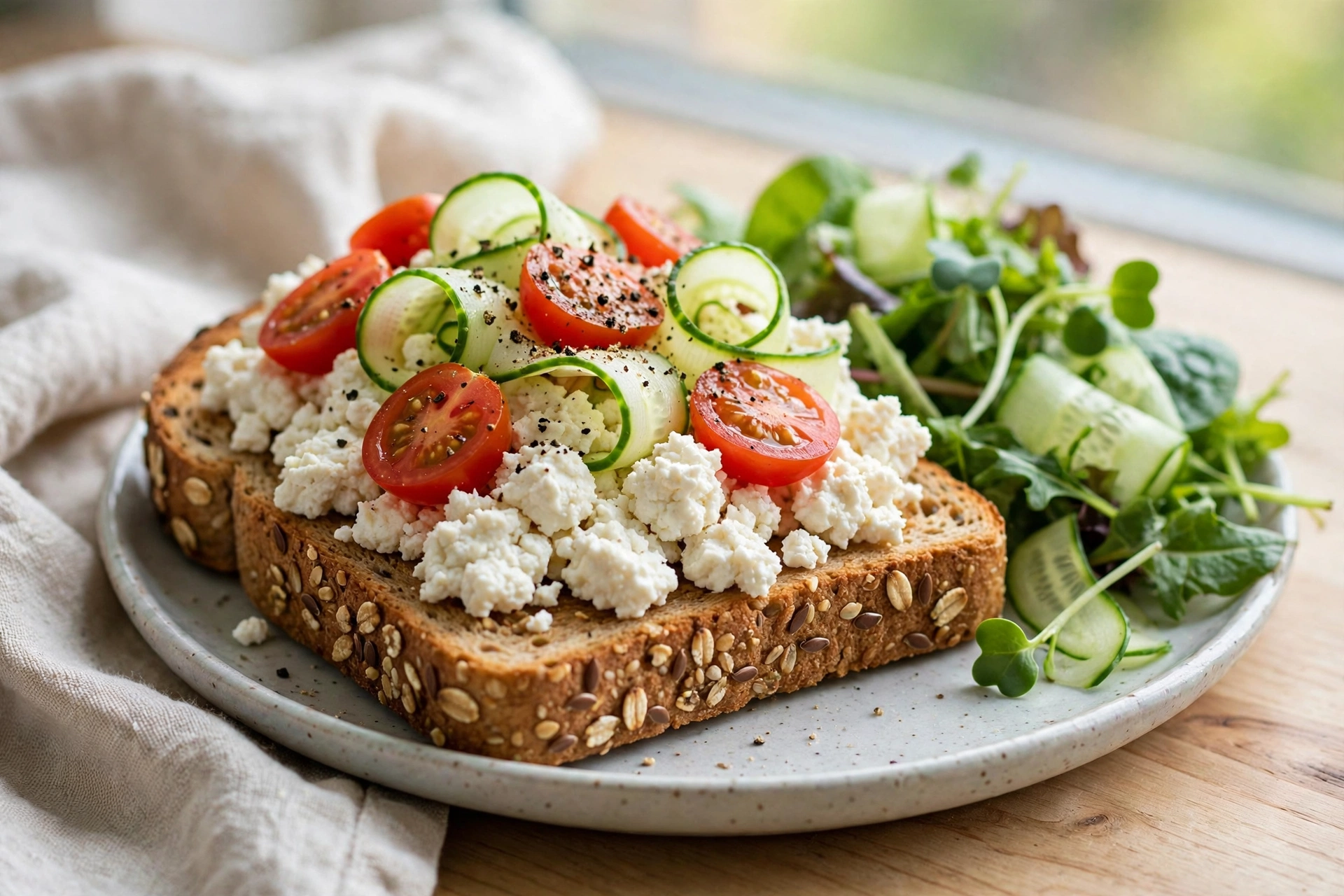
- Breakfast: Spread on whole-grain toast with sliced tomato, cucumber, black pepper and a drizzle of olive oil. For more morning inspiration, see our easy Mediterranean diet breakfast ideas.
- Sweet bowl: Mix the base (skip the vinegar and yeast) with berries, cinnamon and a few walnuts.
- Lunch: Stir into a grain bowl with chickpeas, roasted vegetables and herbs. It also packs well for work, alongside our Mediterranean diet lunch ideas for work.
- Viral "cottage cheese pasta": Blend 1 cup of the tofu and bean version with roasted red peppers and garlic. Toss with whole-wheat pasta.
- Snack: Serve with carrot and celery sticks, or on rye crackers.
- Flatbread: Mix the blended silken tofu version with a little flour and spices for a protein-rich flatbread base.
Pairing tofu-based dishes with vegetables, whole grains and olive oil also keeps your plate in line with a Mediterranean-style pattern.
Common mistakes to avoid
Most disappointing vegan cottage cheese comes down to five fixable mistakes.
- Skipping the press. Unpressed tofu leaks water and turns the whole bowl soggy. Press for at least 10 minutes.
- Using only nuts and calling it high-protein. Cashew-based spreads taste great, but they are mostly fat. If protein is your goal, use tofu, soy yogurt or beans as the base.
- Choosing sweetened or vanilla yogurt. This makes savory dishes taste odd and adds sugar. Use plain, unsweetened soy yogurt.
- Not checking store-bought labels. Some vegan "cottage" products have as little as 2 to 3 grams of protein per 100 g (approximate). Compare labels before you buy.
- Forgetting about salt and tang. Dairy cottage cheese is naturally salty and slightly sour. Without lemon, vinegar and a pinch of salt, tofu tastes flat.
Bonus mistake: relying on one food for all your protein. Spread plant protein across meals, with beans, lentils, whole grains, nuts and seeds too. If weight loss is your goal, our meal plan for weight loss shows how to fit protein into a full day.
FAQ: high-protein vegan cottage cheese
Is there a vegan cottage cheese with as much protein as regular cottage cheese?
Yes. A homemade blend of extra-firm tofu and unsweetened soy yogurt can reach roughly 10 to 14 grams of protein per 100 g (approximate). That is similar to dairy cottage cheese, at about 11 grams. Most store-bought vegan versions are lower, so check the label.
What is the best substitute for cottage cheese in vegan recipes?
Crumbled firm or extra-firm tofu is the best all-round substitute. It has a similar curd look and a high protein content. For baking or whipped desserts, blended silken tofu works better because it is smooth.
Is tofu healthy to eat every day?
For most people, eating soy foods like tofu in normal food amounts is considered safe. Mayo Clinic experts say moderate soy intake can be part of a healthy diet. People with a soy allergy, or those taking MAOI antidepressants, should talk with their doctor first.
Can I use high-protein vegan cottage cheese for the viral cottage cheese recipes?
Mostly, yes. The tofu and bean version works well in blended pasta sauces and dips. Blended silken tofu is better for "cottage cheese ice cream" and flatbreads. Results will differ a little from dairy, so expect to adjust liquid and seasoning.
How long does homemade vegan cottage cheese last?
Keep it in a sealed container in the fridge and eat it within about 3 days. Throw it out if it smells sour in an unpleasant way, looks slimy, or shows mold.
Final thoughts
High-protein vegan cottage cheese lets you join the cottage cheese craze without dairy, and without giving up protein. A simple tofu and soy yogurt blend takes about 10 minutes, costs less than most store-bought options, and fits easily into a plant-based or Mediterranean-style diet.
Start with the base recipe this week. Try it on toast for breakfast, in a lunch bowl, and in one viral pasta recipe. Then pick the swap from the table that suits your taste and goals.
Your next step: Make one batch this weekend, then tell us in the comments which swap you liked best. For more plant-forward eating ideas, explore our Mediterranean diet for beginners guide.
Medical disclaimer
This article is for information only and is not medical advice. Talk to your doctor or a registered dietitian before making big changes to your diet, especially if you have food allergies, a health condition, are pregnant or breastfeeding, or take medication.
Sources
- Protein 101: Essential guide to daily requirements and top healthy sources — Harvard Health Publishing, Oct 2025
- Plant protein may help you live longer — Harvard Health Publishing, Nov 2020
- Dietary intake of total, animal, and plant proteins and risk of all cause, cardiovascular, and cancer mortality — Naghshi S, et al. The BMJ, 2020
- Soy: Usefulness and Safety — National Center for Complementary and Integrative Health (NIH), updated Apr 2025
- Mayo Clinic Minute: Does soy increase breast cancer risk? — Mayo Clinic News Network
- Tofu, firm, prepared with calcium sulfate and magnesium chloride (FDC 172448) — USDA FoodData Central SR Legacy data