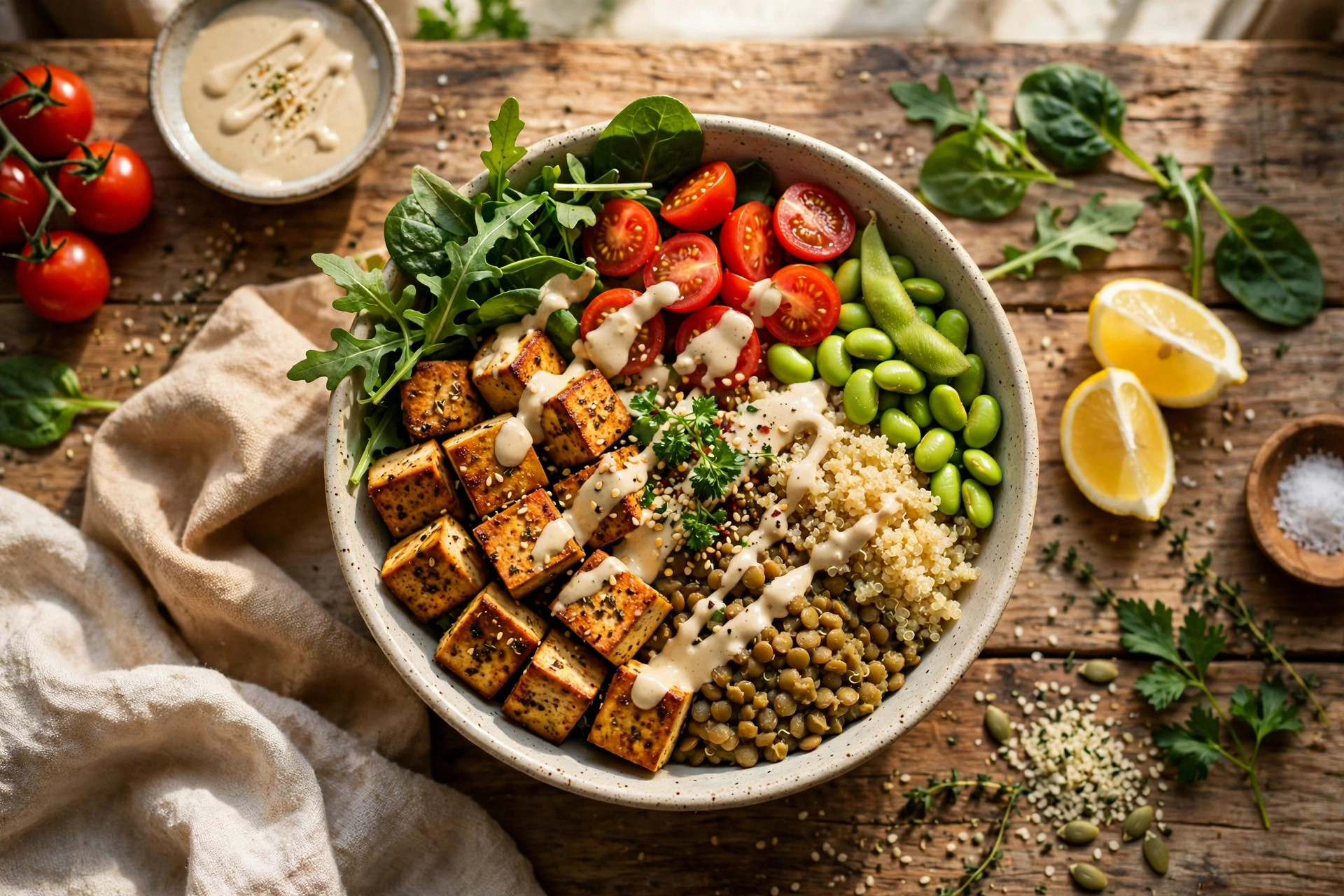
Plant-based protein maxxing is the idea of hitting a higher daily protein target using beans, lentils, tofu, tempeh, nuts, seeds and whole grains instead of piles of meat and protein shakes.
“Protein maxxing” has taken over TikTok, coffee-shop menus and grocery aisles in 2026. Starbucks and Dunkin’ now sell protein drinks, and the new U.S. Dietary Guidelines tell adults to put protein at the center of every meal.
But most viral videos show chicken breasts, steak and whey. If you eat vegan, vegetarian or Mediterranean-style, you may wonder: can I protein max with plants, and should I?
The short answer is yes, you can. And done well, it brings extra fiber and heart-friendly fats along with the protein. This guide shows you how, step by step, with a food table, a sample day and the mistakes to skip.
What Is Protein Maxxing and Why Is It Viral?
Protein maxxing means deliberately pushing your daily protein intake higher than the bare minimum, usually to stay full, protect muscle or support weight loss. The “-maxxing” label comes from internet slang for optimizing one habit to the extreme.
The trend exploded in 2026 for three main reasons:
- New guidelines. The 2025–2030 Dietary Guidelines for Americans say protein should be prioritized at every meal and suggest about 1.2 to 1.6 grams per kilogram of body weight per day, according to a summary in American Family Physician.
- Big brands joined in. Coffee chains and grocery stores now sell protein cold foam, protein water and high-protein snacks.
- GLP-1 and fitness culture. People on weight-loss medicines and lifters both talk about protein to protect muscle.
Social media made it louder. Many viral “what I eat in a day” clips stack meat, whey and protein bars to reach 150 grams or more.
Why plant-based protein maxxing is different
The guidelines list beans, peas, lentils, nuts, seeds and soy right next to eggs, poultry and seafood as protein foods. So you do not need meat to protein max.
Plant-based protein maxxing takes the useful part of the trend (more protein, spread through the day) and drops the risky parts, like loads of processed meat or replacing real meals with ultra-processed bars. If you already follow a Mediterranean diet for vegetarians, you are halfway there.
How Much Protein Do You Actually Need?
Most healthy adults do well somewhere between the classic minimum and the newer, higher range. More is not automatically better.
The long-standing Recommended Dietary Allowance (RDA) is 0.8 grams per kilogram of body weight, or about 0.36 grams per pound. Harvard Health describes this as the minimum you need to avoid deficiency, not an ideal target. It also notes there may be benefits from higher intakes for keeping muscle mass and strength as you age.
The new U.S. guidelines suggest roughly 1.2 to 1.6 g/kg per day. Here is what those numbers look like for different body weights:
| Body weight | RDA minimum (0.8 g/kg) | Guideline range (1.2–1.6 g/kg) |
|---|---|---|
| 121 lb (55 kg) | about 44 g/day | about 66–88 g/day |
| 154 lb (70 kg) | about 56 g/day | about 84–112 g/day |
| 187 lb (85 kg) | about 68 g/day | about 102–136 g/day |
| 220 lb (100 kg) | about 80 g/day | about 120–160 g/day |
All figures are approximate and rounded. If you carry extra body weight, a dietitian may base your target on a goal or adjusted weight instead.
Personalize your plant-based protein maxxing target
Your best number depends on you. Think about:
- Age. Adults over 50 often benefit from the higher end to slow muscle loss.
- Activity. Strength training raises your needs more than desk work does.
- Weight loss. Higher protein helps you feel full and protect muscle while eating fewer calories.
- Health conditions. People with chronic kidney disease (not on dialysis) are usually told to eat less protein. The National Kidney Foundation says the right amount depends on your stage and body size, so talk to a kidney dietitian first.
A simple starting point for most people: aim for about 25–30 grams of protein at each of three meals, then add a protein-rich snack if you need more.
Is Plant Protein Good Enough? Benefits and Evidence
Yes. Research suggests plant protein can build muscle as well as animal protein when the total amount is high enough, and it is linked to better long-term health.
1. It can support muscle just like meat
A University of Illinois trial, reported by Michigan Public/NPR, fed 40 young adults either a vegan or an omnivore diet with about 1.2 g/kg of protein while they lifted weights. Muscle-building rates were the same in both groups.
The study was short (nine days) and only in young adults, so it is a promising sign rather than the final word. Still, it supports the core idea of plant-based protein maxxing: total protein and training matter most.
2. It is linked to a longer life
In the NIH-AARP study of more than 400,000 adults followed for 16 years, swapping just 3% of calories from animal protein to plant protein was tied to about a 10% lower risk of death, according to the National Cancer Institute. Harvard Health notes the benefit was strongest when plant protein replaced red meat and eggs.
These are observational findings. They show a link, not proof that plant protein alone causes the benefit.
3. It comes with fiber and heart-friendly fats
A Harvard review of about 203,000 people found that those with the highest plant-to-animal protein ratio had roughly a 19% lower risk of cardiovascular disease and 27% lower risk of coronary heart disease, as summarized in Harvard Health’s Protein 101 guide.
Beans and lentils bring fiber that meat simply does not have. Nuts, seeds and olive oil bring unsaturated fats. That is the same pattern behind the heart-healthy benefits of the Mediterranean diet.
4. What about “complete” protein?
Soy, quinoa and buckwheat contain all nine essential amino acids. Most other plant foods are low in one or two, but eating a variety over the day fills the gaps. You do not need to combine foods at every meal.
How to Do Plant-Based Protein Maxxing: 9 Smart Ways
The secret is simple: build every meal around one protein-dense plant food, then add a second, smaller source. Here are nine habits that make it easy.
1. Anchor every meal with a “protein hero”
Pick one main protein before you plan the rest of the plate: tofu, tempeh, lentils, beans, edamame or seitan. Then add grains and vegetables around it.
2. Lean on soy foods
Tofu, tempeh, edamame and soy milk are complete proteins and among the most protein-dense plant foods. Extra-firm tofu and tempeh are the easiest swaps for meat in stir-fries, tacos and bowls.
3. Eat beans or lentils once a day (at least)
A cup of cooked lentils gives you about 18 g of protein and plenty of fiber. Toss them into soups, salads, pasta sauce and curries.
4. Upgrade your breakfast
Breakfast is where most people fall short. Try a tofu scramble, overnight oats made with soy milk and hemp seeds, or (for vegetarians) Greek yogurt with nuts. Our easy Mediterranean diet breakfast ideas are a great place to start.
5. Sprinkle seeds on everything
Hemp seeds, pumpkin seeds and chia add a few extra grams each. Three tablespoons of hemp seeds add roughly 10 g of protein to oats, salads or smoothies.
6. Swap your pasta and grains
Chickpea or lentil pasta has about twice the protein of regular pasta. Quinoa beats rice for protein, too.
7. Plan protein-rich snacks
Edamame, roasted chickpeas, hummus with veggies and a small handful of nuts all count. Pair snacks with fiber to stay full.
8. Use protein powder as a helper, not the plan
A scoop of plain pea or soy protein can help on busy days. Choose products with third-party testing and no added “fat-burning” ingredients. Whole foods should still do most of the work.
9. Batch cook once, eat all week
Cook a big pot of lentils, a tray of baked tofu and a batch of quinoa on Sunday. A Mediterranean diet grocery list makes shopping quick, and beans and lentils keep it cheap, as in our budget-friendly Mediterranean diet meals.
Best foods for plant-based protein maxxing
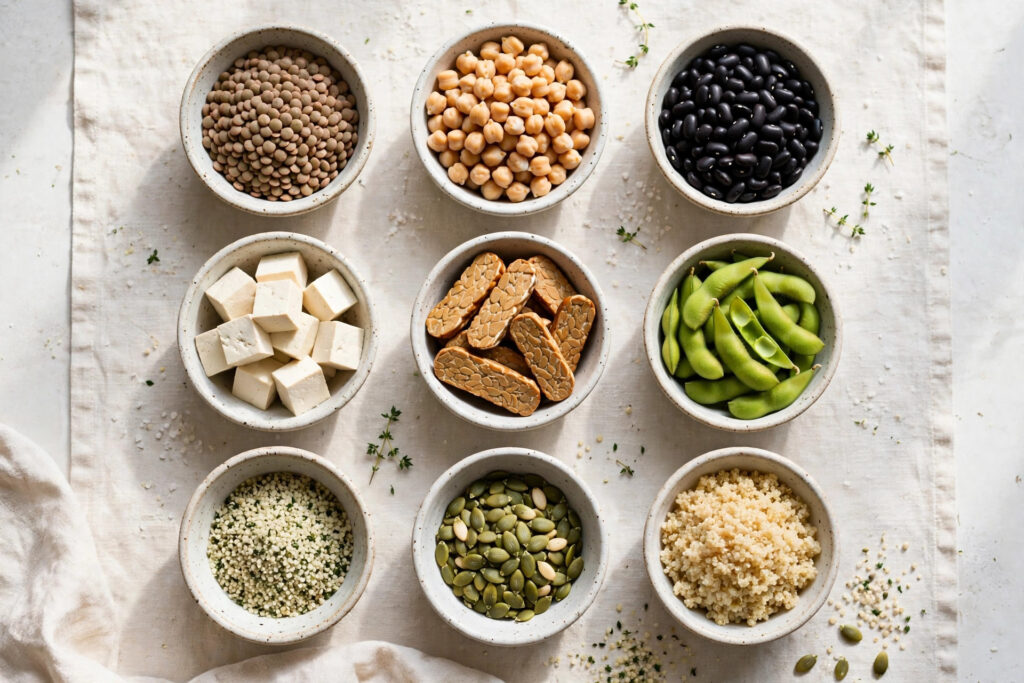
| Food | Serving | Protein (approx.) | Bonus | Vegan? |
|---|---|---|---|---|
| Seitan | 3 oz (85 g) | 15–25 g (varies by brand) | Very low fat | Yes (contains gluten) |
| Firm tofu | 1 cup | 20 g | Complete protein, calcium if calcium-set | Yes |
| Lentils, cooked | 1 cup | 18 g | High fiber, iron, folate | Yes |
| Edamame, shelled | 1 cup | 18 g | Complete protein, fiber | Yes |
| Greek yogurt, plain | 3/4 cup | 15–17 g | Calcium, probiotics | No (vegetarian) |
| Tempeh | 3 oz (85 g) | 16 g | Fermented, complete protein | Yes |
| Chickpeas or black beans, cooked | 1 cup | 15 g | High fiber | Yes |
| Hemp seeds | 3 tbsp | 10 g | Omega-3 ALA, magnesium | Yes |
| Pumpkin seeds | 1 oz (28 g) | 8–9 g | Zinc, magnesium | Yes |
| Quinoa, cooked | 1 cup | 8 g | Complete protein, fiber | Yes |
| Soy milk, unsweetened | 1 cup | 7–8 g | Often fortified with B12 and calcium | Yes |
| Peanut butter | 2 tbsp | 7–8 g | Healthy fats | Yes |
Values are approximate and vary by brand and cooking method. Check the nutrition label for exact numbers.
A sample day of plant-based protein maxxing (about 100 g)
| Meal | What to eat | Protein (approx.) |
|---|---|---|
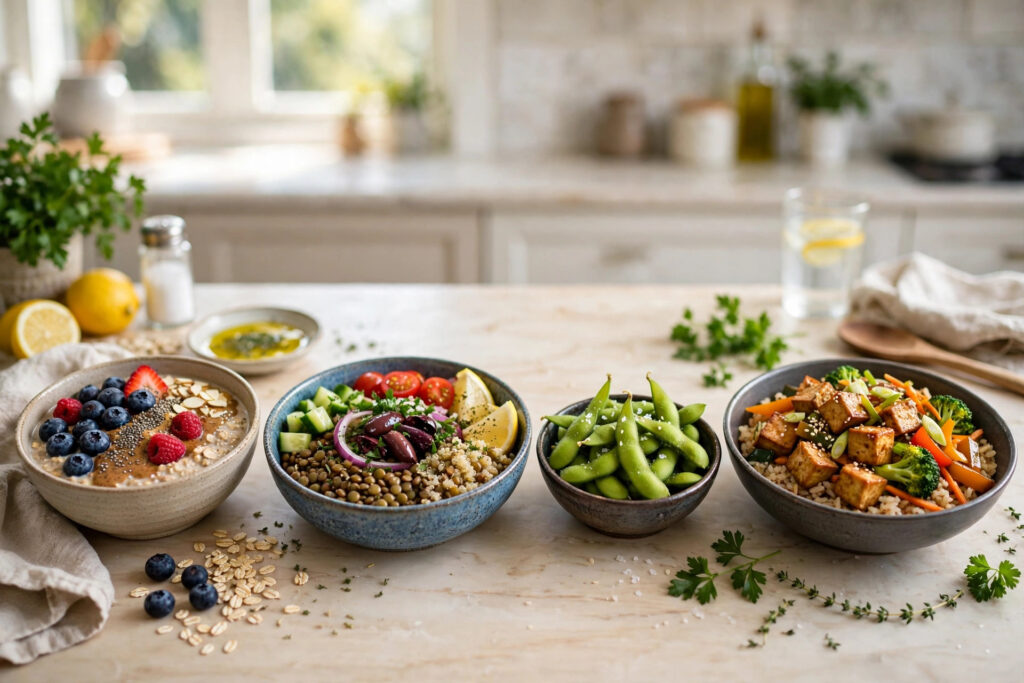
| Breakfast | Overnight oats: 1/2 cup oats, 1 cup soy milk, 3 tbsp hemp seeds, 1 tbsp peanut butter, berries | 26 g |
| Lunch | Mediterranean bowl: 1 cup lentils, 1/2 cup quinoa, 1/4 cup hummus, cucumber, tomato, olive oil | 27 g |
| Snack | 1 cup shelled edamame with sea salt | 18 g |
| Dinner | Tofu stir-fry: 1 cup firm tofu, mixed veggies, 1 cup brown rice | 28 g |
| Total | about 99 g |
Need more for a heavier body or harder training? Add a soy-milk smoothie or swap rice for chickpea pasta. Need less? Drop the snack. For office-friendly ideas, see our Mediterranean diet lunch ideas for work.
Adapting plant-based protein maxxing to your eating style
There is no single “right” way to do this. Match the plan to how you already eat.
- Vegan. Rely on soy, seitan, lentils and beans as daily anchors. Use fortified soy milk for B12 and calcium, and add hemp or pumpkin seeds for zinc.
- Vegetarian. Eggs, Greek yogurt, cottage cheese and milk make the target easier. Mix them with legumes so you still get the fiber benefits.
- Mediterranean or flexitarian. Keep beans, lentils and nuts as your main proteins, and add fish a couple of times a week if you eat it. This keeps saturated fat low while protein goes up.
- Older adults. Appetite often shrinks with age. Smaller, protein-dense meals (lentil soup, tofu scramble, soy-milk smoothies) help you reach the higher end without feeling stuffed.
Can AI apps personalize your protein target?
Many nutrition apps now use AI to estimate protein needs from your weight, age and goals. They can be a handy starting point for logging meals and spotting gaps, such as a low-protein breakfast.
Treat their numbers as estimates, though. Apps do not know your lab results, kidney health or medications. If an app suggests a very high target, double-check it against the 1.2–1.6 g/kg range above or ask a registered dietitian.
Common Plant-Based Protein Maxxing Mistakes to Avoid
Most problems come from copying meat-heavy TikTok routines or chasing a number without looking at the rest of the plate.
- Living on bars and shakes. Many protein bars are ultra-processed and high in sugar alcohols or added sugar. Use them for emergencies, not as meals.
- Going too high, too fast. Doubling beans overnight can mean gas and bloating. Add one extra serving every few days and drink plenty of water.
- Forgetting fiber balance. Plant protein brings fiber, which is great, but very high fiber with low fluid can cause discomfort. Increase both slowly.
- Ignoring key nutrients. Vegans need a reliable source of vitamin B12 (fortified foods or a supplement). Also watch iron, zinc, calcium, iodine and omega-3s, and ask your doctor about testing if you are unsure.
- Pushing out carbs and plants. Protein should not replace fruits, vegetables and whole grains. These still provide most of your fiber, vitamins and energy for workouts.
- Skipping strength training. Extra protein alone will not build muscle. Pair it with resistance exercise two to three times a week. Our guide to the Mediterranean diet and exercise shows how to combine both.
- Ignoring health conditions. If you have kidney disease, diabetes with kidney changes, or another chronic condition, get a personal target from your doctor or a registered dietitian before raising protein.
- Believing “more is always better.” Going far above about 1.6 g/kg rarely adds extra benefit for most people and can crowd out other healthy foods.
FAQ: Plant-Based Protein Maxxing
Can you protein max on a vegan diet?
Yes. By building meals around soy foods, lentils, beans, seitan and seeds, most vegans can reach 1.2–1.6 g/kg per day. A short University of Illinois study found muscle-building rates were similar on vegan and omnivore diets with matched protein.
How much protein should I eat per meal?
For most adults, about 25–30 grams per meal is a practical target. Spreading protein over the day is easier than trying to eat it all at dinner.
Do I need to combine proteins at every meal?
No. Your body pools amino acids over the day. Eating a mix of beans, grains, soy, nuts and seeds across the day is enough.
Is plant-based protein maxxing safe for my kidneys?
For healthy adults, intakes in the 1.2–1.6 g/kg range are generally considered safe. If you have chronic kidney disease, your needs are different, often lower, so follow your doctor’s or kidney dietitian’s advice.
Will plant-based protein maxxing help me lose weight?
It can help. Protein and fiber both increase fullness, which may make it easier to eat fewer calories. Weight loss still depends on your total calories, activity and sleep. See our Mediterranean diet foods for weight loss for more ideas.
Conclusion: Make Protein Maxxing Work for You
Plant-based protein maxxing gives you the useful side of the viral trend without the downsides. You get more protein, plus fiber, healthy fats and a pattern linked to better heart health and a longer life.
Start small this week:
- Work out your personal protein range using the table above
- Add one “protein hero” (tofu, lentils, tempeh or beans) to every meal
- Upgrade breakfast with soy milk, hemp seeds or a tofu scramble
- Batch cook lentils and tofu on the weekend
New to plant-forward eating? Read our Mediterranean diet for beginners guide next, and bookmark Dietinfo for more evidence-based diet guides. Tell us in the comments: what is your favorite plant protein?
Medical disclaimer: This article is for information only and is not medical advice. Talk to your doctor or a registered dietitian before making big changes to your diet, especially if you are pregnant, have kidney disease, diabetes or another health condition, or take medication.
Sources
- American Family Physician: Dietary Guidelines for 2025–2030: Recommendations From the USDA and HHS
- Harvard Health Publishing: How much protein do you need every day?
- Harvard Health Publishing: Protein 101: Essential guide to daily requirements and top healthy sources
- Harvard Health Publishing: Plant protein may help you live longer
- National Cancer Institute (NIH): Plant and animal protein intake and mortality
- National Kidney Foundation: CKD diet: how much protein is the right amount?
- Michigan Public / NPR: Vegan diet matches meat for muscle gains