
If you keep asking yourself “why am I tired after going vegan?”, you are far from alone. Many people feel full of energy in their first plant-based weeks, while others feel flat, foggy or sleepy by mid-afternoon.
The good news: in most cases the cause is simple and fixable. It usually comes down to eating too little, missing a few key nutrients, or swapping meat for refined carbs instead of real plant protein.
This question also hit the news this autumn. A University of Geneva study in mice, reported widely in September 2026, found that switching to an all-plant diet changed how the liver handled protein and sugar within about two days. The mice also moved around less. Headlines ran with it, and “vegan tiredness” started trending again on TikTok and Reddit.
In this pillar guide, we explain what that study really means (and what it does not), walk through the 9 most common reasons for vegan fatigue, and give you a practical food table and meal ideas to get your energy back.
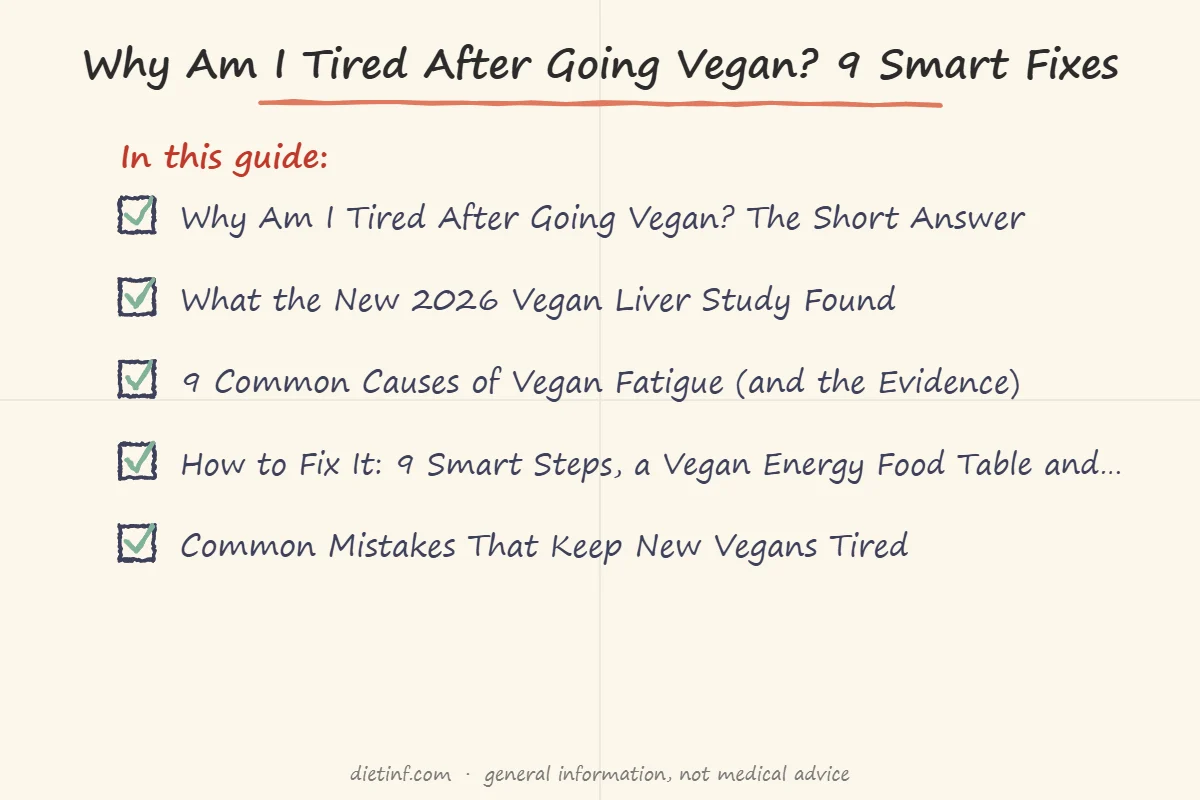
Table of Contents
Why Am I Tired After Going Vegan? The Short Answer
Most tiredness after going vegan comes from one of three gaps: not enough energy (calories), not enough protein, or not enough of a few micronutrients such as vitamin B12, iron and iodine.
Plant foods are often bulky and high in fiber and water. That is great for your gut and your heart, but it also means you can feel full while eating far fewer calories than before. Fewer calories plus less protein is a classic recipe for low energy.
Other causes are less about food: a big change in routine, poor sleep, stress, or a medical issue that was there before you changed your diet. Tiredness that lasts for weeks always deserves a check-up.
Is feeling tired after going vegan normal in the first week?
A short dip in the first one to two weeks is common. Your gut is adjusting to more fiber, you may be eating at different times, and you are still learning which meals keep you full.
That early dip should fade. If it does not, or it gets worse after a month or two, look more closely at the nutrient causes below. Vitamin B12 stores, for example, can take months or even years to run low, so B12-related tiredness often appears later, not in week one.
What the New 2026 Vegan Liver Study Found
The study behind this autumn’s headlines came from Professor Pierre Maechler’s team at the University of Geneva. It was published online in September 2026 in the journal Molecular Metabolism, as reported by Newsweek.
Here is what the researchers saw, in simple terms:
- The animals were mice, not people. They were moved from a lacto-vegetarian diet (with dairy proteins) to a fully vegan diet.
- Within about two days, their livers were less efficient at making glucose during fasting, a job that normally uses amino acids from protein.
- An enzyme called glutamate dehydrogenase (GDH), which links protein and sugar metabolism, dropped.
- The mice became less active, for example running less on their wheels. This reversed quickly when they went back to the animal-protein diet.
The lead researcher said a vegan diet is “possible” but takes daily effort to get enough protein, iron, calcium and B12. He pointed to protein-rich plant foods such as tofu, nuts and lentils.
What this does not mean for people
Mouse results do not translate neatly to humans. Dr. Neal Barnard of the Physicians Committee, who was not involved, told Newsweek that GDH works quite differently between species, and that human studies of plant-based diets show benefits such as better blood sugar control and less liver fat.
So the fair takeaway is not “vegan diets make you tired.” It is this: the quality and amount of plant protein you eat matters, especially right after a switch. If you want a deeper dive, our guide to plant-based protein maxxing shows how to hit your protein target with everyday foods.
9 Common Causes of Vegan Fatigue (and the Evidence)
Working out why you are tired after going vegan is a bit like detective work. Go through these causes one by one. Often two or three small gaps add up.
1. You are simply not eating enough
This is the number one cause. Vegetables, beans and whole grains are filling but lower in calories than meat, cheese and fried foods. Many new vegans eat “clean” salads and smoothies and end up hundreds of calories short each day without noticing.
Sign: you feel hungry again soon after meals, or you are losing weight you did not plan to lose.
2. Your protein is too low or too uneven
Protein helps keep blood sugar steady and supports muscles. The new mouse study is a reminder that the body notices when protein supply changes. A common general target for adults is roughly 0.8 g of protein per kg of body weight per day (approximate; active people often need more).
If your lunch is a plain veggie wrap and dinner is pasta with tomato sauce, you may be getting far less. Mayo Clinic lists soy foods, legumes, lentils, nuts, seeds and whole grains as good plant protein sources.
3. Vitamin B12 is running low
Vitamin B12 is found almost only in animal foods. Harvard Health notes that vegans who do not eat fortified foods or take a supplement are at risk of deficiency. Symptoms can include fatigue, weakness, tingling in the hands or feet, and memory or thinking problems. The average adult needs about 2.4 micrograms a day.
Because the body stores B12, low levels can sneak up slowly. Only a blood test can confirm a deficiency, so do not guess.
4. Iron intake or absorption is not quite right
Plant foods contain non-heme iron, which is absorbed less easily than the heme iron in meat. A review in the Medical Journal of Australia found that vegetarians who eat a varied, well-balanced diet are not at higher risk of iron deficiency anemia than meat eaters. The key word is varied.
The same review explains that vitamin C helps your body absorb plant iron. People who menstruate, are pregnant or donate blood often need extra attention here.
5. Iodine is missing
Iodine supports your thyroid, which helps control energy use. Dairy and seafood are major iodine sources in many Western diets, so cutting them can drop your intake. Mayo Clinic points to iodized salt as a simple plant-friendly source. Seaweed contains iodine too, but amounts vary a lot, so do not overdo it.
6. Too many refined carbs, too little balance
White bread, sweet cereals, vegan pastries and big bowls of plain pasta can cause quick energy highs and lows. Being vegan does not automatically mean eating well. Building meals around beans, tofu, whole grains, vegetables and healthy fats gives steadier energy. Our balanced diet tips cover the basics of building a full plate.
7. Not enough healthy fats or omega-3s
Fat helps you absorb some vitamins and keeps meals satisfying. Some new vegans go very low-fat by accident. Mayo Clinic lists walnuts, ground flaxseed, canola oil and soybeans as plant sources of omega-3 fats.
8. Fiber shock and gut changes
A sudden jump in fiber can bring bloating, gas and broken sleep for the first week or two. Feeling uncomfortable and sleeping poorly can easily feel like “vegan fatigue.” Increase fiber step by step and drink enough water.
9. It is not the diet at all
Sometimes the timing is a coincidence. Poor sleep, stress, a new job, low vitamin D in winter, thyroid problems, anemia from other causes or depression can all cause tiredness. If you are still tired after going vegan for several weeks, even after fixing your meals, see your doctor and ask for blood tests.
How to Fix It: 9 Smart Steps, a Vegan Energy Food Table and Meal Ideas
You do not need to give up plant-based eating to feel good. These steps match the causes above, so start with the ones that fit you best.
- Eat enough. Add a fist-sized portion of whole grains or potatoes and a thumb of healthy fat (nuts, seeds, olive oil, avocado) to each meal.
- Put protein at every meal. Aim for a palm-sized serving of tofu, tempeh, lentils, beans, edamame or seitan, plus nuts or seeds.
- Cover vitamin B12 every day. Use B12-fortified foods (some plant milks, cereals, nutritional yeast) or a B12 supplement, as advised by health bodies. This is one supplement with strong evidence for vegans.
- Pair iron with vitamin C. Add peppers, tomatoes, citrus or broccoli to bean and lentil dishes.
- Keep tea and coffee away from iron-rich meals. Drink them an hour or so before or after if you are working on your iron.
- Use iodized salt in cooking (in normal amounts) instead of only sea salt or pink salt.
- Add omega-3 foods such as walnuts, ground flaxseed or chia most days.
- Raise fiber slowly and drink water through the day.
- Get a blood test if you are still tired after a month of better eating. Ask about B12, iron (ferritin), vitamin D and thyroid.
Vegan energy foods: what they give you
The numbers below are approximate and vary by brand and cooking method. Check labels for fortified products.
| Food (typical serving) | Protein (approx.) | Key energy nutrients | Easy way to use it |
|---|---|---|---|
| Cooked lentils, 1 cup | ~18 g | Iron, folate, fiber | Lentil soup or dal with tomatoes |
| Tempeh, 100 g | ~19 g | Iron, protein | Sliced and pan-fried in a stir-fry |
| Firm tofu, ½ cup | ~10–20 g (by firmness) | Protein; calcium if calcium-set | Scrambled tofu breakfast |
| Cooked chickpeas, 1 cup | ~14 g | Iron, fiber | Hummus or roasted chickpeas |
| Pumpkin seeds, 1 oz (28 g) | ~8 g | Iron, zinc, magnesium | Sprinkle on salads and oats |
| Fortified soy milk, 1 cup | ~7 g | B12 and calcium (if fortified) | Smoothies, oats, coffee |
| Fortified nutritional yeast, 2 tbsp | ~5 g | B12 (if fortified) | “Cheesy” topping on pasta or popcorn |
| Cooked quinoa, 1 cup | ~8 g | Iron, magnesium | Base for grain bowls |
| Walnuts or ground flaxseed, 2 tbsp | ~3–4 g | Plant omega-3 (ALA) | Stir into oats or yogurt |
| Red bell pepper, 1 medium | ~1 g | Vitamin C (boosts iron absorption) | Raw with hummus or in chili |
Simple meal ideas for steady energy
- Breakfast: Tofu scramble with spinach and red pepper, whole-grain toast, and a glass of fortified soy milk.
- Lunch: Big lentil and quinoa bowl with roasted veg, pumpkin seeds and a lemon-tahini dressing.
- Snack: Hummus with pepper strips, or a creamy high-protein spread like our high-protein vegan cottage cheese on crackers.
- Dinner: Tempeh and broccoli stir-fry with brown rice and a drizzle of sesame oil.
- Mediterranean option: Chickpea and tomato stew with olive oil and whole-grain bread, inspired by our Mediterranean diet for vegetarians guide.
Each of these meals combines protein, slow carbs, fat and a vitamin C food, which is the simple formula that tends to keep energy steady.
Common Mistakes That Keep New Vegans Tired
If you are tired after going vegan, check whether one of these everyday habits is holding you back.
- Just removing meat and dairy, without adding anything. A plate of rice and vegetables minus the chicken is not a balanced vegan meal. Replace what you removed with beans, tofu, tempeh or seitan.
- Living on salads and smoothies. They are healthy, but often too low in calories and protein to fuel a busy day.
- Skipping B12 because you “eat clean.” No amount of fresh vegetables provides reliable B12. Fortified foods or a supplement are the safe route.
- Relying on vegan junk food. Vegan cookies, chips and fake-meat burgers can fit in sometimes, but they should not be your main meals.
- Going all-in overnight with fiber. Moving from a low-fiber diet to three bean meals a day can upset your gut and your sleep. Build up over two to three weeks.
- Cutting salt completely, or using only non-iodized salt. You may miss out on iodine.
- Drinking tea with every meal. Tea and coffee can reduce plant iron absorption if you drink them with food.
- Self-diagnosing and buying random “energy” supplements. Products that promise to “detox” or “boost energy” rarely have good evidence. Test first, then target what you actually lack.
- Ignoring other signs. Pale skin, shortness of breath, numbness or tingling, or very heavy periods need a doctor, not just a new recipe.
FAQ: Why Am I Tired After Going Vegan?
1. How long does tiredness last after going vegan?
For many people, a mild dip in energy fades within one to three weeks as their gut and eating habits adjust. If you still feel tired after a month, review your calories, protein and B12, and talk to your doctor about blood tests.
2. Can a lack of vitamin B12 make vegans tired?
Yes. Low B12 can cause fatigue, weakness and tingling, according to Harvard Health. It can take months to develop because the body stores B12. Vegans should use fortified foods or a B12 supplement and can ask for a blood test if they have symptoms.
3. Does a vegan diet hurt your liver, based on the new 2026 study?
The 2026 University of Geneva study was done in mice, not humans. It showed short-term changes in how the liver handled protein and sugar after a switch to an all-plant diet. Outside experts say the results do not directly apply to people, and human studies link well-planned plant-based diets to less liver fat.
4. What should I eat if I feel tired on a plant-based diet?
Build each meal around a protein (tofu, tempeh, lentils, beans), a whole grain or starchy vegetable, a healthy fat and a colorful vegetable rich in vitamin C. Add fortified plant milk or nutritional yeast for B12.
5. Should I stop being vegan if I feel tired?
Not necessarily. Most vegan fatigue comes from fixable gaps such as eating too little or missing B12, iron or iodine. Try the steps in this guide for a few weeks. If tiredness continues, see a doctor or a registered dietitian who understands plant-based eating.
Conclusion: Get Your Plant-Powered Energy Back
So, why am I tired after going vegan? For most people the answer is not the plants themselves but the gaps around them: too few calories, too little protein, and missing B12, iron or iodine. The 2026 mouse study adds a useful reminder that protein quality matters during a switch, but it is not proof that vegan diets drain human energy.
Start small this week. Add protein to every meal, choose one reliable B12 source, pair beans with vitamin C foods, and eat enough. Give it two to four weeks, and see a doctor if you still feel run down.
Your next step: pick three foods from the table above and add them to your shopping list today. Then explore our plant-based protein maxxing guide for more high-protein meal ideas, and share this article with a friend who just went vegan.
Medical Disclaimer
This article is for information only and is not medical advice. It does not replace a diagnosis or treatment from a qualified health professional. Talk to your doctor or a registered dietitian before making big diet changes, starting supplements, or if you have ongoing tiredness or other symptoms.
Sources
- Newsweek. Report on the University of Geneva all-plant protein diet and liver study (University of Geneva study, Molecular Metabolism, Sept 2026).
- Mayo Clinic. Vegetarian diet: How to get the best nutrition.
- Harvard Health Publishing. Vitamin B12 deficiency can be sneaky and harmful.
- Review: Iron and vegetarian diets. Medical Journal of Australia, 2013 (via PubMed, NIH National Library of Medicine).
