Can a plant-based diet to slow biological aging really work, or is it just another wellness promise? This autumn, a big new study gave us a clearer answer than we have ever had.
In a 2026 paper in Nature Communications, researchers at the German Center for Neurodegenerative Diseases (DZNE) looked at about 7,500 adults. They scored each person on 10 well-known healthy eating patterns. These included the Mediterranean, Nordic, DASH, MIND and several plant-based diet scores.
The headline result? People who ate closer to any of these healthy patterns tended to have a slower “biological clock” in their blood cells. There was no single winning diet. The news spread fast across health sites and social feeds.
That is good news if you love plants. Most of these patterns are built on vegetables, fruit, beans, whole grains, nuts and olive oil. But the study also shows a catch: not every plant-based plate is equal.
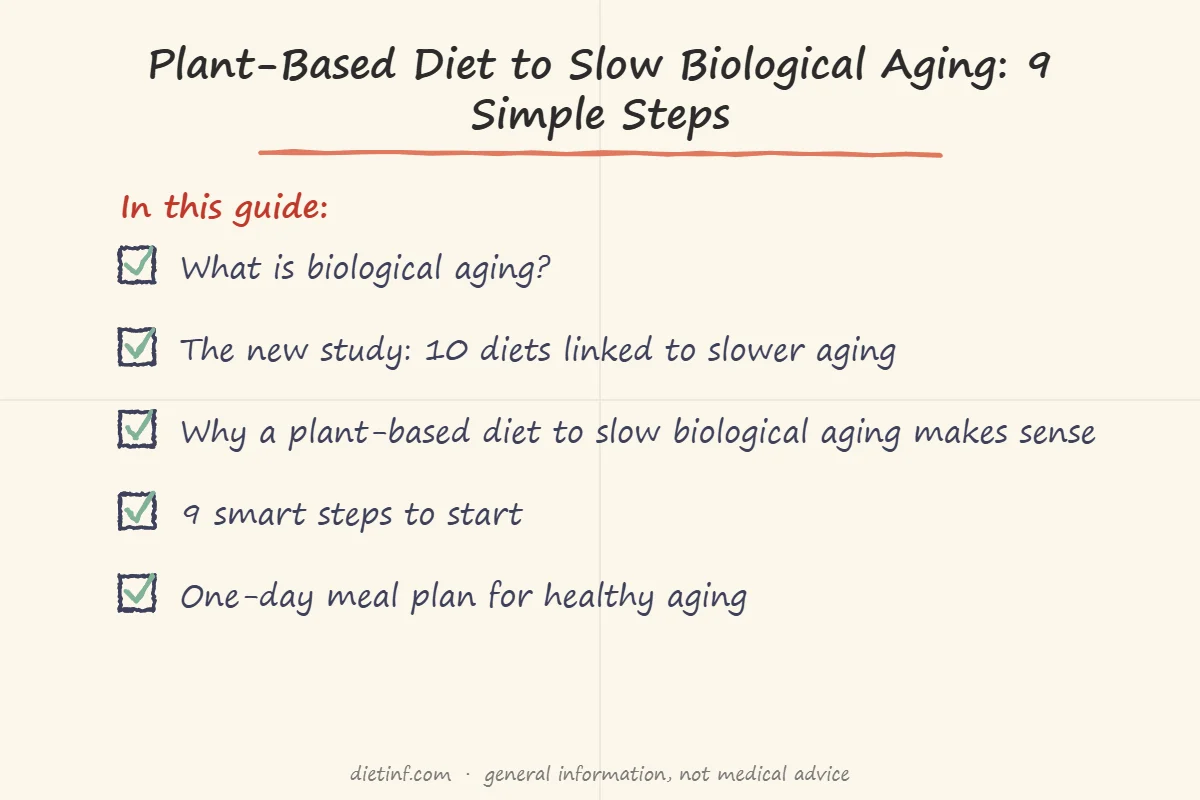
In this guide, you will learn what biological aging means, what the new science says, and 9 simple steps to build your own plant-forward way of eating. You will also get a one-day meal plan table, common mistakes to avoid, and answers to the top questions people are asking.
Table of Contents
What is biological aging?
Your chronological age is simple. It is the number of birthdays you have had. Your biological age is different. It tries to describe how “old” your body seems on the inside.
Two people born in the same year can age at very different speeds. Genes matter. But so do sleep, smoking, stress, movement and food.
How scientists measure it: epigenetic clocks
Inside your cells, tiny chemical tags called methyl groups sit on your DNA. They act like sticky notes that help switch genes on or off. This process is called DNA methylation.
The pattern of these tags shifts as we get older. Researchers have built computer models, called epigenetic clocks, that read the pattern from a blood sample. The clocks then estimate biological age or the pace of aging.
The new study used three well-known clocks:
- GrimAge – linked in past research to lifespan and disease risk
- PhenoAge – built from health markers like blood sugar and inflammation
- DunedinPACE – estimates how fast you are aging right now, like a speedometer
What these clocks can and cannot tell you
Epigenetic clocks are powerful research tools. But they are still mostly used in studies, not in your doctor’s office. Results can vary between clocks and between labs.
So if you see an at-home “biological age test” online, treat the number with care. It is one estimate, not a diagnosis. Your blood pressure, blood sugar, cholesterol, weight and fitness are still the markers your doctor uses most.
The new study: 10 diets linked to slower aging
The Nature Communications study followed two groups of German adults. The main group was 6,470 people from the Rhineland Study in Bonn, aged 30 to 95. A second group of 1,034 people from the EPIC-Potsdam Study was used to check the results.
Each person filled in a detailed food questionnaire. The team then scored how closely their eating matched 10 different healthy diet patterns. Finally, they compared those scores with three epigenetic clocks from a blood sample.
The 10 diet patterns at a glance
| Diet pattern | Main idea | Plant focus | Link to slower aging in the study |
|---|---|---|---|
| Mediterranean | Vegetables, beans, whole grains, olive oil, fish | High | Yes, healthier scores linked to slower aging |
| DASH | Built to lower blood pressure; produce, low-fat dairy, less salt | High | Yes, one of the clearer links |
| MIND | Mediterranean + DASH mix for brain health; leafy greens, berries | High | Yes |
| Nordic | Rye, oats, berries, root vegetables, rapeseed oil, fish | High | Yes, one of the clearer links |
| AHEI-2010 | Harvard-style quality score for chronic disease prevention | High | Yes |
| EAT-Lancet | “Planetary health” diet, mostly plants | Very high | Yes |
| Plant-based Diet Index (PDI) | More plant foods of any kind, fewer animal foods | Very high | Yes |
| Healthful PDI (hPDI) | Whole plant foods: grains, fruit, veg, nuts, beans | Very high | Yes |
| Unhealthful PDI (uPDI) | Refined plant foods: white bread, sweets, sugary drinks | High (but processed) | Weakest; very few DNA changes found |
| Dietary Inflammatory Index (DII) | How inflammatory your diet is (higher = worse) | n/a | Higher scores linked to faster aging |
Key findings in plain English
- Every healthy pattern pointed the same way. Eating closer to any of them was linked to a slower aging pace.
- No single “best” diet. Some scores, like DASH and Nordic, showed slightly clearer links, but the differences were small.
- People rarely match every diet. Only 18 of about 6,500 people were in the top quarter for all the scores. Most people do well on one pattern and less well on another.
- Shared biology. More than 70% of the affected pathways were common across the diets, according to the ScienceDaily summary. These relate to cell structure, signaling and metabolism.
- Bigger link in smokers. The link between healthy food and slower aging looked stronger in smokers. The researchers do not yet know why.
How big was the effect?
In short, modest. The authors themselves described it as “not massive, but measurable.” For example, each step up in DASH score was linked to roughly a 0.1 standard deviation slower DunedinPACE pace (approximate).
That will not turn a 60-year-old into a 40-year-old. But small shifts across millions of meals can add up over a lifetime. That is why researchers see diet as a useful tool for prevention.
What the study cannot prove
This was an observational study. It shows a link, not cause and effect. People who eat well may also sleep better, move more or earn more. Food intake was also self-reported, which is never perfect. And all the volunteers were German, so results may differ in other countries.
Why a plant-based diet to slow biological aging makes sense
Look back at the table. Almost every pattern linked to slower aging is plant-heavy. Beans, greens, whole grains, fruit, nuts and healthy oils show up again and again.
That makes a plant-based diet to slow biological aging a sensible, flexible choice. You do not have to go fully vegan. You can lean Mediterranean, Nordic or simply “mostly plants.”
Evidence from other studies
The DZNE paper is not alone. Earlier in 2026, a US study in the journal Aging-US looked at nearly 4,900 adults from two large American studies (ARIC and NHANES). People with higher healthful plant-based diet scores had slower aging on the GrimAge2 clock. The unhealthful plant score showed no such link.
This matches long-running heart research. A large Harvard-led analysis of about 209,000 health workers, reported by the American College of Cardiology, found that a healthful plant-based diet was linked to lower heart disease risk. A plant diet heavy in refined grains, sweets and sugary drinks was linked to higher risk.
The big lesson: quality beats labels
Put together, the message is clear. What kind of plants you eat matters more than the word “vegan” on the label. Fries, white bread and soda are technically plant-based. They do not seem to help your biological clock.
Possible benefits of eating this way
Research links healthy plant-forward eating with many benefits. Keep in mind most of this is observational evidence:
- Less inflammation. Diets rich in fiber, polyphenols and healthy fats tend to score lower on inflammation indexes. In the DZNE study, a more inflammatory diet was linked to faster aging.
- Better blood pressure. DASH-style eating is well known to help lower blood pressure. See our guide to foods that lower blood pressure.
- Heart protection. Whole grains, nuts, beans and olive oil are linked to healthier cholesterol and lower heart risk.
- Brain support. The MIND diet was linked to memory-related pathways in the new study. Read more in our MIND diet for vegetarians guide.
- Gut health. Fiber feeds helpful gut bacteria that make short-chain fatty acids, which may calm inflammation.
- Healthy weight. High-fiber, whole foods are filling and usually lower in calories per bite.
9 smart steps to start
The study’s biggest gift is freedom. Since many healthy patterns work, you can choose the one that fits your taste, culture and budget. Here is how to build your plan.
Step 1: Pick a pattern you actually enjoy
Love pasta, olive oil and tomatoes? Go Mediterranean. Like oats, rye bread and berries? Try Nordic. Need to watch blood pressure? DASH is a strong fit. If you are new, our Mediterranean diet for vegetarians guide is a friendly place to start.
The best diet is the one you will still follow next year.
Step 2: Fill half your plate with vegetables and fruit
This rule works in every pattern. Aim for color: dark leafy greens, orange carrots, red peppers, purple cabbage and berries. Different colors bring different plant compounds.
Step 3: Eat beans or lentils most days
Beans, lentils, chickpeas and peas are a common thread in long-lived food cultures. They give you protein, fiber, folate and minerals for very little money. Start with half a cup a day and build up slowly to avoid gas.
Step 4: Swap refined grains for whole grains
This is where the healthful vs unhealthful plant score really splits. Choose oats, brown rice, whole-wheat bread, barley, rye, quinoa or bulgur. Keep white bread, pastries and sugary cereal as occasional foods.
Step 5: Use healthy fats every day
Extra-virgin olive oil is the star of the Mediterranean diet. Rapeseed (canola) oil plays the same role in Nordic eating. Add a small handful of nuts or seeds daily, like walnuts, almonds, flax or chia.
Step 6: Get enough plant protein
Protein matters more as we age, because it helps protect muscle. Mix tofu, tempeh, edamame, beans, lentils, seitan, nuts and seeds through the day. For ideas, see our guide to plant-based protein maxxing.
Step 7: Cut back on sugary drinks and ultra-processed snacks
Soda, sweets and refined snacks are the core of the unhealthful plant score. In the new study, that score had the weakest link to the aging clocks. Swap soda for water, sparkling water, or unsweetened tea or coffee.
Step 8: Personalize your plant-based diet to slow biological aging
This is where personalized nutrition comes in. Your needs depend on your age, health, activity and medicines. A few things to check with your doctor or a registered dietitian:
- Vitamin B12. Plant foods do not naturally contain B12. According to Mayo Clinic, older adults and people on vegetarian or vegan diets are more likely to run low, partly because absorption drops with age. Fortified foods or a supplement your doctor recommends can help.
- Vitamin D, calcium, iron, zinc, iodine and omega-3s. These need more planning when you eat few or no animal foods.
- Medical conditions. People with kidney disease, diabetes or on blood thinners may need tailored advice.
Some people now use AI meal planners or app-based tracking to spot gaps. These can help, but they do not replace a professional who knows your health history.
Step 9: Pair food with other healthy habits
Food is only one lever. Not smoking, regular movement, good sleep, managing stress and staying social all matter for healthy aging. Our post on Mediterranean diet and exercise shows how the two work together.
One-day meal plan for healthy aging
Here is a sample day that blends Mediterranean, Nordic and DASH ideas. It is about 1,800–2,000 calories and roughly 85–95 g of protein and 40+ g of fiber (approximate values; adjust portions to your needs).
| Meal | What to eat | Patterns it fits | Why it helps |
|---|---|---|---|
| Breakfast | Overnight oats with soy milk, chia seeds, walnuts and blueberries | Nordic, MIND, DASH | Whole grain, fiber, omega-3 ALA, berry polyphenols |
| Mid-morning snack | Unsweetened soy yogurt with sliced pear and pumpkin seeds | DASH, hPDI | Protein, calcium (if fortified), fiber |
| Lunch | Big salad bowl: spinach, chickpeas, quinoa, tomato, cucumber, olives, olive oil and lemon | Mediterranean, MIND | Leafy greens, beans, healthy fats |
| Afternoon snack | Hummus with carrot sticks and a small whole-grain pita | Mediterranean | Plant protein, fiber, beta-carotene |
| Dinner | Lentil and vegetable stew with barley, side of roasted broccoli and tofu | Nordic, EAT-Lancet, hPDI | Protein, fiber, folate, cruciferous veg |
| Dessert / evening | A square of dark chocolate (70%+) and a handful of grapes | Mediterranean | A small treat without a sugar spike |
| Drinks | Water, green tea, coffee without sugar | All | Swaps out sugary drinks |
Want more ideas? Try our Mediterranean diet grocery list to stock your kitchen for the week.
Quick swap guide
- White toast → whole-grain rye or sourdough
- Soda → sparkling water with lemon
- Chips → roasted chickpeas or a small handful of nuts
- Butter on bread → olive oil or avocado
- Processed meat sandwich → hummus and veggie wrap
Common mistakes to avoid
- Going “plant-based” on junk food. Vegan cookies, chips and fries still count as unhealthful plant foods. Build meals around whole foods first.
- Forgetting vitamin B12. This is the most common gap for vegans and vegetarians, and the risk rises with age. Ask your doctor about testing.
- Not eating enough protein. Many older adults already eat too little protein. Include a protein source at every meal.
- Chasing one “perfect” diet. The new study shows there is no single best pattern. Pick one you can keep.
- Obsessing over an at-home biological age test. These numbers can vary a lot. Focus on habits and the health checks your doctor recommends.
- Expecting fast results. The effects in studies are modest and build over years. Think long-term, not 30-day challenges.
- Buying “anti-aging” supplements. No pill has been shown to reproduce the benefits of a healthy diet. Many claims are unproven.
- Adding fiber too fast. A sudden jump in beans and whole grains can cause bloating. Increase slowly and drink enough water.
FAQ
Can a plant-based diet to slow biological aging really make me younger?
Not in the way ads promise. Studies link healthy plant-based eating to a slightly slower pace of biological aging on epigenetic clocks. They do not show that diet reverses age. The effects are modest but may add up over many years.
Do I have to go vegan to slow biological aging?
No. In the 2026 DZNE study, 10 different healthy patterns were all linked to slower aging, including Mediterranean, Nordic and DASH, which can include fish or dairy. The common thread is lots of whole plant foods.
Which diet is best for slowing biological aging?
There is no single winner. DASH and Nordic scores showed slightly clearer links in the study, but the differences were small. The best choice is a healthy pattern you enjoy and can stick with.
What foods speed up biological aging?
The study did not rank single foods. But diets scoring high on inflammation, and plant diets heavy in refined grains, sweets and sugary drinks, showed weaker or worse links. Smoking also plays a big role in aging.
Are at-home biological age tests worth it?
They can be interesting, but they are not medical tests. Different clocks and labs can give different numbers. Your blood pressure, cholesterol, blood sugar and fitness are still more useful for everyday health decisions.
Conclusion
The new science sends a hopeful message. A plant-based diet to slow biological aging does not need to be strict, expensive or trendy. Many healthy patterns seem to help, as long as they are built on vegetables, fruit, beans, whole grains, nuts and healthy oils.
Start small this week. Add one bean meal, swap one refined grain and replace one sugary drink. Small changes, repeated over years, are what the research rewards.
Ready to start? Try our one-day meal plan above, then explore our Mediterranean diet for vegetarians guide for a full week of ideas. Share this post with a friend who is curious about healthy aging.
Medical disclaimer
This article is for information only and is not medical advice. It does not replace advice from your doctor or a registered dietitian. Talk to a qualified health professional before making big changes to your diet, especially if you have a health condition, take medicines, are pregnant, or are an older adult.
Sources
- Tavares JF, et al. Associations between diet quality, epigenetic aging and epigenome in two population-based cohorts. Nature Communications, 2026.
- ScienceDaily. Scientists find 10 different diets linked to slower aging. October 2026.
- Kim H, et al. Plant-based dietary patterns are associated with slower epigenetic aging. Aging-US, 2026.
- American College of Cardiology. Some plant-based diets may increase heart disease risk. 2017.
- Mayo Clinic. Vitamin B-12.